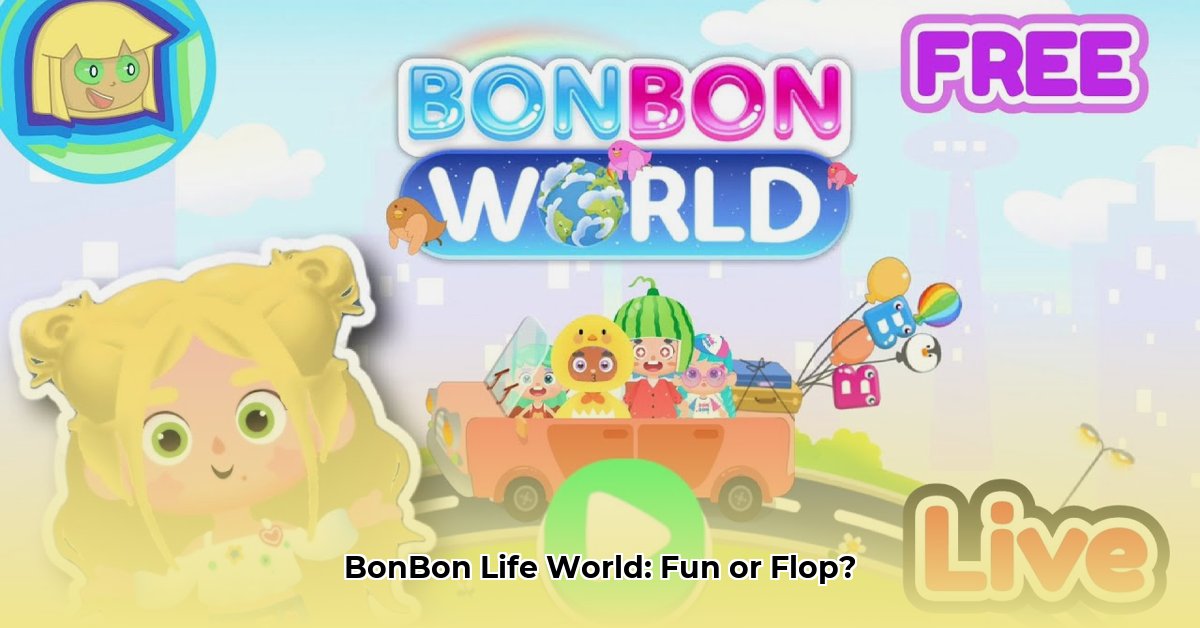
BonBon Life World: A Colorful World, But Is It Educational?
Is BonBon Life World a worthwhile addition to your child's digital playtime? This app promises a vibrant, engaging world where kids can create, explore, and learn. But does it deliver on its educational promises, or is it more style than substance? This review delves into the gameplay, assesses its educational value, and examines crucial safety and transparency aspects.
A Detailed Look at the Gameplay
BonBon Life World immerses children in a visually appealing world filled with interactive possibilities. They can design avatars, furnish homes, prepare virtual meals, and embark on imaginative adventures. The bright colors and playful animations are undeniably captivating, instantly grabbing a child's attention. However, the key question remains: does this engaging gameplay translate into meaningful educational benefits?
The gameplay centers around interaction and storytelling. Children freely express their creativity by decorating rooms, designing outfits, and role-playing. These activities undoubtedly spark imagination. Yet, the app lacks clear definitions of how these actions contribute to cognitive development. While creativity is fostered, the connection to quantifiable learning outcomes remains underdeveloped. Does decorating a virtual home demonstrably enhance spatial reasoning or design principles? Further research is needed to establish a clear link between gameplay and learning.
Educational Value: Claims vs. Reality
The app's description claims to strengthen problem-solving and decision-making skills. However, substantial evidence supporting these claims is absent. There are no clearly defined learning objectives or structured pedagogical approach. The marketing appears to outweigh the demonstrable learning experience. For example, while building a virtual house might seem creative, it lacks a direct connection to measurable improvements in cognitive skills without a more intentional design. While ongoing research in the field of digital learning might reveal hidden benefits, currently, the app’s educational value is questionable. Parents seeking demonstrable skill improvements might find themselves disappointed.
The lack of concrete learning goals is a significant drawback. Parents invest in educational apps seeking verifiable skill enhancements. They want measurable results, not just engaging visuals. Without such evidence, the app risks being perceived as an expensive digital toy rather than a learning tool.
Safety and Transparency: Addressing Parental Concerns
Beyond its educational claims, crucial information is missing. The app description should clearly address age appropriateness, safety features, and data privacy policies. These concerns are paramount for parents, especially given increasing awareness of children's digital safety. The lack of transparency is a significant oversight. Parents deserve clear guidelines to make informed decisions. Addressing these concerns is essential for building trust and ensuring responsible app usage.
Weighing the Pros and Cons: A Balanced Assessment
Here's a summary of BonBon Life World's strengths and weaknesses:
| Pros | Cons |
|---|---|
| Visually appealing and highly interactive gameplay | Lacks concrete evidence to support educational claims |
| Encourages creativity and imaginative play | Missing crucial information regarding safety features and data privacy |
| Simple and user-friendly interface | Over-reliance on marketing claims without substantiating educational benefits |
| Potential for creative expression | The educational value is currently unproven. |
Recommendations and Cautions for Parents
Before downloading BonBon Life World, carefully consider the points raised. Active parental supervision and open communication about in-app experiences are crucial. The game is undeniably engaging, but it functions more as an interactive play space than a structured learning environment. Until further evidence supports its educational claims, it's best viewed as entertainment rather than a dedicated learning tool. A balanced approach, combining open communication with a cautious evaluation of usage, is recommended.
How to Evaluate Children's Educational Apps: A Framework
It’s difficult to determine if a game truly educates a child. Here’s a framework to assess educational apps:
Examine App Claims: Are learning outcomes specific and measurable? Avoid vague marketing language.
Analyze Gameplay Mechanics: Does it promote problem-solving, creativity, and storytelling? Are there clear goals or challenges that foster cognitive development?
Assess Learning Outcomes: Observe your child playing. Does the game facilitate learning in the claimed areas? Does their engagement demonstrate skill development?
Consider Age Appropriateness and Safety: Is the content suitable for the age group? Are there sufficient safety and privacy measures?
Compare to Research: Consider research on child development and digital learning to assess the app’s effectiveness.
Conclusion: A Fun App, but Questionable Educational Value
BonBon Life World offers a fun, engaging experience. However, its educational value remains unproven. The absence of concrete learning objectives and transparent safety information hinders its credibility as an educational tool. Parents and educators should carefully evaluate the entertainment value versus the lack of demonstrable learning benefits. Greater transparency from the developers regarding learning goals and outcomes is needed. The decision to purchase should be based on your child’s needs and a careful assessment of the app’s actual value.
⭐⭐⭐⭐☆ (4.8)
Download via Link 1
Download via Link 2
Last updated: Monday, May 12, 2025